Tuesday, December 4, 2007

NABJ IN SENEGAL: DAY FOUR


Day Four
Tuesday, December 4, 2007

STUCK IN THE DESERT

John Yearwood
World Editor
The Miami Herald

Photos by John Yearwood, Barbara Ciara and Bob Butler

DAROU FALL -- It’s often said that traveling in Africa can be unpredictable and richly rewarding. The fellows found that out first-hand on Day 4 of the reporting mission to Senegal.
The plan was to visit this farming community about two hours northeast of Dakar to talk with residents and experts about how sand blowing in from the nearby ocean as well as from the Sahara desert had severely disrupted the lives of farmers. Some were forced to stop farming after arable land was covered in sand.
A couple miles from the community, fellows transferred from their bus into four Toyota Land Cruisers, which were expected to have maximum maneuverability in the several feet of sand.
Problem was that it didn’t quite work out that way.
Within 10 minutes, the second vehicle in the convoy got stuck. As everyone piled out of their vehicles to see what was happening, Bob Butler joined local guides in pushing the vehicle out of the sand.
It didn’t take long for another vehicle to get stuck. And this one had a blowout. The tire was changed and off we went to finally see the damage the sand had done to the area.
Several aid agencies, including those from the United States and the United Nations, began a massive tree-planting effort in the mid-1970's to stem the advance of the sand. It’s a work in progress. Some of the farmers said they have been able to plant carrots, onions, potatoes and other crops since the work began.
President Abdoulaye Wade, in a meeting with fellows the day before, called it the Great Green Wall, which he would like to build from Senegal to Djibouti.
After interviewing farmers, their wives and children, fellows piled into the SUVs for the trip back. We didn’t get far. The same second vehicle got stuck again -- and blew out another tire.
Some fellows had to abandon the vehicle and walk up a sand dune where others were waiting for them.

Half-hour later, the tire was replaced and we sped away by a more scenic route -- happy to leave the desert behind. We passed a horse-drawn taxi and I'll bet IT doesn't get stuck in the sand.


DROP IT LIKE IT'S HOT
Cindy George
Reporter
Houston Chronicle
Photos by Bob Butler


Ummm, I don’t know what to do here.
Djibril was excited on our way to the desert Tuesday because we had the chance to stop by environmental offices he figured would have nicer accommodations for a bathroom break.
So we stopped. It was the middle of town where women in colorful outfits hawked incredible watermelons stacked on the side of the road. Men in kiosks with awnings were selling smokes and such. A few cars and buses shared the road with several horse and buggy combinations.
I was the last off the van because I debated whether to go in, but I was curious and urgent, if you get my drift, so I went.
Men in camouflage warmly greeted Djibril and welcomed us into their compound, which was tucked inside this strip of commerce.
As I approached the building, I overheard Sister President Barbara utter an ever-so-richly toned “Oh” as she swung open a door.
I didn’t know why she gave a two-letter word such inflexion, but I was about to find out.
Since a line was forming, one guy eagerly invited me to alternative facilities around the corner. (I felt like I was getting the VIP treatment Ojinika commands from a great many African men we have encountered.)
I needed relief, so I was glad to cut the line.
I looked inside the small room. There was a white aluminum basin with a hole cradled by an indentation on the dirt floor. A bucket of water held an empty commercial kitchen-sized vegetable can. I looked up for the sink. No sink. I checked outside the door. No sink. So I’m thinking: “But where do we wash our hands?” Then I realized there was no stool to sit on!
Jesus keep me near the cross.
I ran back around the building to our world traveler, Regina, who should know something about this – from the female perspective.
“Ummm, how do I do this?”
She smiles and beckons me to the far side of the building to demonstrate. Gleefully, she said I should center my feet on the foot rests. Foot rests? I need a butt rest! That other basin didn’t have either.
“Pull your pants way, way down,” she said, easing into a deep squat that made it look easy. “Then dip the can in the bucket and flush the toilet for sanitary reasons.”
I was intrigued, but if ever a time for BABY WIPES…it…is…now!
Let’s take a station break right here, America – and likely, the world:
The word on the street will be that Cindy freaked out.
Do not believe them. They have tried to portray me as someone utterly unprepared to handle any discomfort of the Third World.
Please.
Now, can we move on?
This is about “advance notice,” as Djibril so aptly summarized at dinner.
You know, like, get your shots, buy a plug converter, get malaria medicine, and, oh yeah, master the pee-pee squat.
For real, though: My deal is that I could have practiced, like people bust a move in the living room to see how ridiculous they might look on the dance floor at an upcoming wedding. I could have been rehearsing this little maneuver in the bathtub where making a mess would have had little consequence. I could have been dropping it like it’s hot in the club (and hoping I could pick it back up) to get my hamstrings ready. What better reason to get to the gym?
Djibril, bless his heart, has been a great host, front man, ambassador, waymaker, translator, leader and near-magician during our trip to Senegal. He is the man who makes things happen. He and his team have been incredible in organizing this trip. But, he of the down-there point-and-shoot variety did not prepare those of us with other plumbing.
Sure, I studied African culture in undergrad. But I guess I never thought I would, unexpectedly, swing open a door and find the facilities to be a hole and a bucket.
Surprise!
Sitting all the way down was not an option. Holding onto the wall was out of the question.
Ladies, there are lots of solutions to this. Had I known, I would have stocked up on plastic cups before leaving the Dakar hotel.
But I didn’t turn away. My curiosity as a journalist wouldn’t let me. OK, neither would my bladder.
So, alcohol-spiked baby wipes in pocket, I squatted people. The experience has been had.
And, it was kind of cool. Kind of. Just a little. OK, well, let’s just all agree that it’s something everyone should do in a lifetime. Check.
It’s too bad surprise short-circuited my survival instinct – je ne sais quoi that could have saved me a whole lot of aggravation. That quart-sized plastic bag that was holding the wipes? It could have been put to a higher use in that closet. Please believe: I have some reliable new Ziplocs that will be tucked inside my computer bag today. I guess I have been given “advance notice.”

Monday, December 3, 2007

Day Three

NABJ SENEGAL DAY THREE
Monday, December 3rd, 2007
Ojinika Obiekwe, WPIX-TV/CW 11 Morning News Producer
Photos by Regina H. Boone/Detroit Free Press


I thought I’d never have to say this and mean it, but “this was the longest day of my life” and the strangest part is that I’m not complaining about it. You see, I have issues sitting still or paying attention, but today was quite different. I had to not only sit still, I had to pay attention, I mean, really pay attention…
And I did it all because of one man. Not just any man, I’m talking about the President of Senegal, Abdoulaye Wade, whom we all had the honor and privilege to meet today. I know the other fellows, who for some reason like to give me a hard time, would say that I was forced to pay attention, because the president had a conversation with me. Some, (Cindy!!!!) might say that this “conversation” lasted only 10 seconds and she might be right, but who’s keeping time really? All that matters is that he and I had a moment, and we bonded.
Here’s what happened: We arrived at the Presidential Palace for the meeting. And when the President arrived, he greeted each and every one of us individually and we took our seats. NABJ President Barbara Ciara introduced all the fellows. Then it was time for the president to give his speech…so he started speaking and then paused for a second looked at me, and said “you are the most hardworking journalist I’ve ever met and I see a Pulitzer prize in your future.” Okay, maybe he didn’t really say those words but I know he was thinking it. But what he did tell me was that my name sounds Nigerian. And asked me if I’m from there. And boy, was he right. I am Nigerian, and when I told him that, he said that it shows he still knows his African countries. Oh and did I mention that he didn’t ask anyone else about their names. Not Barbara, not Regina, Bob, Khadijah, Travers, not even Kafia. Why didn’t he, you ask? I’m glad you asked that question and the answer is simple. I’m special, and the others? Hmmmm. And because I'm so special he promised to come hang out with me at the Unity Convention next July in Chicago.
Speaking of the president, to say that he was very nice and down to earth would be an understatement. He was very warm and welcoming and made us feel at home.
I can’t say I know that any heads of state, but I’m quite sure that not many of them would be as available, patient, and as kind as he was to us. He is a born leader. He has hopes, dreams and a vision for the country of Senegal. And I must say that the citizens of Senegal are lucky to have a man of his caliber to lead them to a better and brighter future.
I know many presidents and politicians make promises and talk about dreams that never become reality. President Wade is not one of those leaders. He is a man with a plan. And some might wonder how I can be so sure of his character after just knowing him for a couple of hours. I would say that I’m a good judge of character. I really am. There was nothing pretentious about him. He outlined his plans for education, health issues and the climate change issues that plague Senegal. These are some of the issues we’ll be reporting on during our stay here. So stay tuned!!!!


Cindy George
Staff Writer
Houston Chronicle


Africa isn’t what most Americans think.
And the Senegalese people want Americans to know that.
Lions? Tigers? Bears? Haven’t seen any.
There’s a perception that Africa is so far away. The reality? A commercial airliner can get you from New York to Africa in less than eight hours.
The Senegalese are emphatic. They want their brothers and sisters of the Diaspora who are living in the United States to know the real Senegal.
This is my first trip to Africa and the misconceptions I carry as an American, beyond my academic training, are striking.
I suppose I expected the government leaders in a post-colonial, independent country in Sub-Saharan black Africa to be, well, black people, but it is stunning to meet black person after black person running a nation. These were well-educated, well-dressed, multilingual black people.
This is Africa.
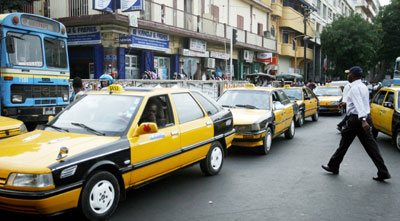
On the Dakar streets, you’ll see crude chariots pulled by disinterested horses and mules beside a near-parade of shiny Mercedes and Land Rovers in some sections of town. Men in suits with briefcases operate beside women in colorful traditional garb carrying fruit or water on their heads.
This is Africa.
So many contradictions abound. Like pre-Katrina New Orleans, there are palatial homes next door to shacks. This too is Africa.
I’ve never met George Bush, neither one of them in fact, but I now have met a head of state: His Excellency Abdoulaye Wade of Senegal.
He is a man bent on building a better country through more educated people with greater resources. He is focused on reducing the high cost of oil to his nation by cutting better deals with energy companies that require more profits for Senegal. And, he is serious about companies leery about how money left behind to benefit the country is spent – or misspent. President Wade says: Keep the money in the U.S., Europe and the Middle East, but when I come calling, you show up and build a school, build a hospital or build the roads that we need.
He has great ambitions for this relatively young country.
The man who translated his French into English for us, Mohamed Camara, chatted in Japanese with Regina and when Kafia told him she was Somali, he piped up with a Somali greeting. This man spoke 15 languages! He also told us he lived in New York for 20 years and popped off some East Coast slang to prove it. Amazing.
This is Africa.
In our meeting with cabinet-level ministers later Monday, we had the chance to ask questions about HIV/AIDS, malaria, infant mortality, alternative energy and education. In the end, several of the ministers emphasized their concern about the perceptions of Africa in the West and specifically the United States.
“Indeed the media sells a very negative image of Africa, generally,” the minister of information, also a medical doctor, told us in French as interpreted in English by a translator. The minister said he wishes media reports would focus on health and education instead of African conflict.
“Besides the wars that are being shown on a daily basis, it is like the United States of Africa are fighting,” he said. “We do not manufacture weapons. …Who is making these weapons? Certainly not us.”
He said the real war is the battle to represent the Continent with a greater sense of balance and reality plus the challenge of African leaders to develop their countries.
“Africa is fighting to recover its dignity and stand on its own two feet,” he said.
The minister of the environment said he often finds himself correcting misconceptions, even while on a stop at his favorite donut franchise. The minister asked the businessman why the U.S. company was not investing in Africa.
“He said to me: ‘Africa is so far — so far.’ I asked him: Do you know how long it would take you to go to Africa? – and he didn’t know. You are investing in Asia. It will take you at least 25 flying hours or more. Dakar is only eight hours away. He said: ‘Well, I didn’t know that. I wasn’t aware.’”
The minister concluded that the mistaken beliefs were “mere ignorance.”
“Africa is behind the end of the world,” he said, in jest.
Hopefully, this trip will help our readers, our American readers, better understand Africa.

Sunday, December 2, 2007

NABJ Senegal Day 2


DAY 2 Goree Island, Senegal
December 2, 2007
Khadijah White, NOW on PBS
Photos by Bob Butler, KCBS Radio; Regina H. Boone, Detroit Free Press; Travers Johnson, The Maroon Tiger, Morehouse College


We were heading to a slave island, the last point that entire families would see their mothers, fathers, sons, and daughters. They would head to different points of the world, dispersed throughout the Carribean and the Americas. On occasion, their own descendants would find traces of each other in those rare “you look just like my cousin” moments, transcending accents, languages, and nations. It was a complex history, made even more difficult by the sunny, brilliant beauty of Goree Island that seemed to contradict the pain and suffering that occurred so long ago. “I’m a little anxious,” my dear NABJ president, Barbara Ciara admitted. She wasn’t the only one.


When we reached the house that stored slaves before the tumultuous travel ahead, we struggled to take it in. The rooms were small—seemingly too small to house the men, women and children who had stayed there, attached to the wall by shackles that gripped them by the necks. Girls, boys, men and women had been separated by thick cold concrete, sickened by the excrement on the floor that ran loose on their unclothed bodies. People who were ill and did not recover were literally thrown to the sharks – no clemency for even the sick. Rebels were placed in a chamber too small to stand and too dark to see anything or anyone else. It was a horror we couldn’t imagine on an island of such beauty, the glittering water shining a brilliant blue through the “Door of No Return” (left), where all the slaves took their last steps on African soil to board ships bound for the Middle Passage. We posed and snapped pictures, too busy to feel the emotions that would flood us later.


Yet, what was most striking to me wasn’t the slave house or the memories it contained. It was the children that were spread all across the island, greeting us from our first moment there to our last steps off. As the ferry approached the island, boys swam with smooth, sure strokes, holding their hands open for passengers to throw down coins that they quickly found and stored in their mouth, still chattering with ease. Another small boy sat quietly, reading in an archway as our group traveled by. There was a little girl who rushed behind her mother, cheerfully advertising the jewelry that hung from her hands. There were also the tiny boys, none more than age 5, who stood up, puffed out their chests to pose for the camera. And there were the children who followed us to the boat, gleefully walking away with Ojinika’s water bottle when she finally realized that they would happily take that instead of her reporter’s notebook.

The children remind of us the healing potential for Senegal— and I guess, for us all. Their joy and vigor lessens the death and sadness of the island’s legacy – it reminds me that the sun keeps shining, that life keeps going, that people survive. So I take a bittersweet recollection of Goree Island with me as we continue in our journey – one I also give to you.


Travers Johnson, The Maroon Tiger, Morehouse College

I went to Goree Island today and didn’t cry. I didn’t drop to my knees in despair upon entering the slave house. I didn’t curl up in the corner of the closet-sized chamber where (if I had lived 200 years ago) I probably would have been shackled for upwards of 3 months with 19 other adult males. I didn’t breakdown when I reached the “Door of No Return” — the storied ocean-facing exit of the slave house, where the Africans were thrown onto the slave ships, never to see their homes again. And I didn’t leave the Island resenting every white tourist that I saw.

I went to Goree Island today, didn’t cry, and don’t really know why.

Maybe it was because I was distracted. Distracted by the young Senegalese man, about my age, who was dressed like he had just popped out of the latest hip-hop video on MTV—clad in an oversized black tee, sagging black jeans, gold-rimmed aviator sunglasses, a fitted cap carefully tilted to the right side of his head, and a watch with so much fake bling that I had to shield my eyes.

I was distracted by the posters of Tupac Shakur on the side of a slave house that read “Thug Life.” I was distracted by the flowing purple hair weave on the head of a Senegalese girl, and the knockoff Gucci toboggan that a young boy wore. I was distracted by the fact that the song “Public Affair,” by the blonde-haired, bird-brained American pop singer Jessica Simpson, was playing on the radio that belonged to a Senegalese artist.

I was distracted by the mob of vendors that ambushed our delegation at every turn; I was distracted by the young Senegalese boy who sat in a classroom playing a computer game; but mostly, I was distracted by my realization that every pre-conceived notion that I had, every judgment that I had made prior to arriving, and everything that I had expected to see, to feel, and to experience while on Goree Island was, for the most part, wrong.

During our delegation’s press briefing at the United Nations on Friday, NABJ President Barbara Ciara challenged all of the fellows to answer the following question: “What is the myth and what is the reality of Senegal?” With each passing day in this beautiful country I am beginning to answer this question. Yes, from my privileged middle class American viewpoint, there are a lot of problems in Senegal. But over the past two days I have seen that there are a lot of things to celebrate as well. I have also been very intrigued by the intersection of American and Senegalese culture here. I mean, I didn’t expect to see half-dressed people doing tribal dances around a bonfire, but I didn’t expect to hear Jessica Simpson blaring on someone’s radio either.

All in all, I expect to be surprised by what I learn throughout the rest of this trip; to have all of my stereotypes of Africa disproved. But then again, I expected to cry at Goree Island.

Saturday, December 1, 2007

Day One

Dakar, Senegal
Saturday, December 1, 2007
Bob Butler, KCBS Radio
(Photos by Regina H. Boone/Detroit Free Press)


5:25 AM... Our flight landed in Dakar Saturday morning. We were escorted by one of the key organizers of the trip, United Nations Director of the Office of Sport for Development and Peace Djibril Diallo, to the VIP "Ambassador Salon" where we sat while our passports were processed by immigration. After a 30-minute wait, we collected our baggage, bypassed customs, and were taken by bus to our hotel, the five-star Le Meridien President. The hotel is being renovated and was supposed to be closed to us. But, according to Diallo, President Abdoulaye Wade ordered it opened to accomodate us. (Yes, that's how Djibril rolls!!!)

After a tasty breakfast most of us took a nap. After lunch we went into town for a bit of sightseeing. Our bus crawled through the bustling Plateau central business district, which resembles a flea market except cars drive through the streets. This is the same street where police on November 21st clashed with vendors who had been ordered cleared by President Wade. (http://news.bbc.co.uk/1/hi/world/africa/7105772.stm)

The highlight was a stop at the Medina District, the oldest neighborhood in Dakar, for a visit to the fish market at Soumbebioune (soom-bih-JUNE).
The market is literally on the shores of Senegal Bay. The boats go out about 5 am and don't return until 3 or 4 in the afternoon. The fishermen unload their catches and try to sell them right there on the beach. You had many choices, including tuna, snapper, shark, eel and squid. Fish are sold by the pile, usually for between $2 and $20 (US).

Sunday is going to be exciting. We're going to visit Goree Island which was the last stop for many of our ancestors before they were sold into slavery in the Americas and the Caribbean.


Kafia Hosh, Staff writer at the Freelance Star in Fredericksburg, VA

Our plane landed shortly after sunrise on a cool December morning. The air was thick and the sun peaked slightly from the sky. We stepped off the plane onto the runway and walked toward a building. It looked more like a hotel than a terminal, with its marble steps and intricately carved, wooden door. After a non-stop, seven-hour flight, we were all red-eyed, with disheveled hair and wrinkled clothing. Despite our frumpy appearance, the airport guards took us to a VIP waiting room. I plopped down on a red, leather couch and looked around. It was unusual, sitting in a lounge in an airport that appeared to be a hotel. I filled out my Customs card, and waited for a guard to check our passports. When we cleared security, we went off to get our luggage from the baggage claim area. The conveyer belt stood still and all of our bags were lined up neatly for us to claim. It was the first real indication that the building we were in housed an airport.

We got our bags and were ready to board a shuttle that would finally take us to our hotel. But before we could get on, I was approached by two young boys. They held out their hands and one of them said, “dollar, please.” They appeared to be about 8 or 9 years old and wore old, tattered sweats and dusty plastic sandals. Their skin was ashy, and their eyes red. They looked like they had been up the entire night. Someone in our group advised us against giving any beggars money, because it would only promote more begging. I fell silent and shook my head at the boys. But they made their rounds to other members of our group. When no one budged, they gave up and walked away.